I spent $470 on smart home hubs thinking they were essential. A Samsung SmartThings Hub for $100. A Philips Hue Bridge for $60. An Aqara Hub for $70. A Lutron Caseta Bridge for $80. Each manufacturer insisted I needed their proprietary hub to use their devices. My entertainment center looked like a server rack with four hubs, a router, and a tangle of ethernet cables creating visual chaos.
The breaking point came when I wanted to add smart blinds but discovered they required yet another hub at $140. I’d already spent $470 on hubs. Adding a fifth hub to control blinds felt absurd. That’s when I researched hubless alternatives and discovered I didn’t need any of these expensive bridges. Everything could work through Wi-Fi, Bluetooth, or a single universal platform.
Table of Contents
Understanding Hubless Smart Home Technology
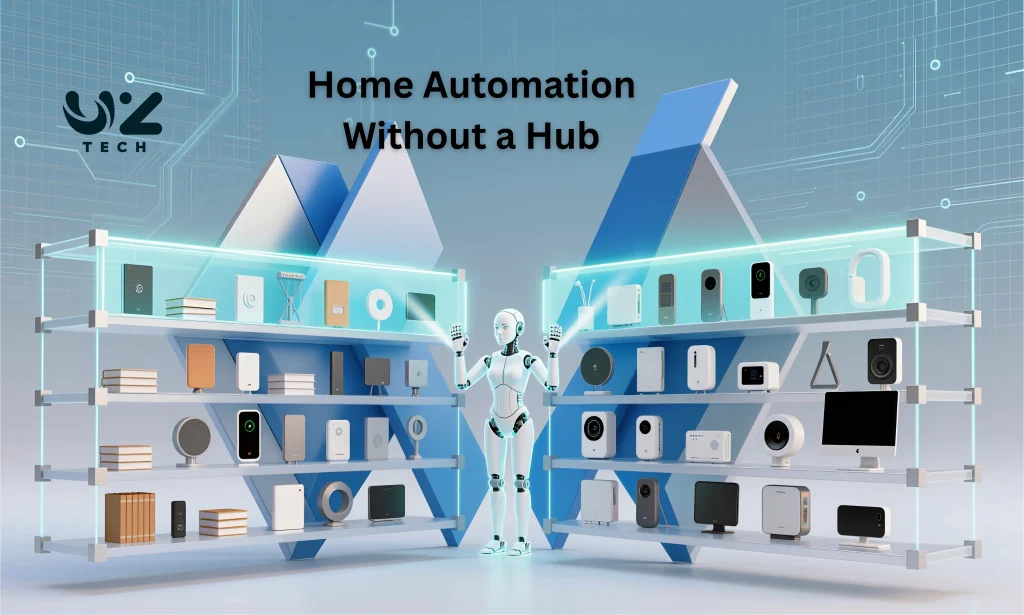
Home automation without a hub means devices connect directly to your Wi-Fi network or smartphone via Bluetooth rather than requiring separate bridge hardware. Research shows Wi-Fi and Bluetooth devices communicate directly with your phone, eliminating the middleman hub entirely.
I learned through wasting $470 that modern smart devices don’t need hubs like they did five years ago. Wi-Fi has become reliable enough and Bluetooth range has extended sufficiently that direct connections work excellently for most home automation needs.
The hubless approach that actually worked used Wi-Fi devices for stationary items like smart plugs and bulbs, Bluetooth for portable devices like sensors, and voice assistants like Alexa or Google Home as free coordination platforms when needed.
My Complete Hubless Smart Home Setup
After removing all proprietary hubs, here’s the fully functional hubless system I built for significantly less money.
Lighting Without Hubs
I replaced Philips Hue bulbs requiring the $60 bridge with LIFX bulbs at $12 each. LIFX connects directly to Wi-Fi without any hub. The setup took 30 seconds per bulb through their app. Voice control through Alexa worked immediately without configuration.
The Wyze smart bulbs at $9 each also work hubless through Wi-Fi. TP-Link Kasa bulbs at $10 provide another excellent hubless option. All three brands deliver identical functionality to Hue at half the price without requiring expensive bridges.
Real results: Switching from Hue to LIFX saved $60 on the bridge plus roughly $5 per bulb. For 14 bulbs, that’s $130 in total savings with zero functionality loss.
Smart Plugs and Switches
Every smart plug I tested works hubless. TP-Link Kasa plugs at $9, Wyze plugs at $15 for two-packs, and Amazon Smart Plug at $25 all connect directly to Wi-Fi without hubs.
These plugs schedule on/off times, monitor energy usage, and integrate with voice assistants identically to hub-based alternatives. The setup process is actually simpler without hubs because you skip the bridge configuration step entirely.
Real results: Smart plugs saved $100 by eliminating the SmartThings hub I’d purchased specifically to coordinate them. The plugs work perfectly through the Alexa app without SmartThings.
Security Without Bridges
I replaced my Aqara sensors requiring a $70 hub with Wyze sensors at $20 for a starter kit. The Wyze sensors connect via Bluetooth to a small bridge that plugs directly into outlets rather than requiring ethernet connections and dedicated shelf space.
Ring and Arlo cameras work entirely hubless through Wi-Fi. My Ring doorbell connects to Wi-Fi and sends notifications directly to my phone without requiring the expensive Ring Chime Pro hub.
Real results: Eliminating the Aqara hub saved $70 while the Wyze system provides identical door/window sensors, motion detection, and smartphone alerts.
Voice Assistants as Free Hubs
The secret to hubless automation is using Alexa or Google Home as coordination platforms. These voice assistants create routines between different brands without requiring proprietary hubs.
My “Good Morning” routine turns on LIFX lights, starts my Kasa coffee maker, and adjusts my generic Wi-Fi thermostat. All different brands coordinating through Alexa’s free platform rather than requiring separate hubs.
Amazon Echo Dot costs $50 and coordinates unlimited devices across brands. Compare that to buying three $70 to $100 proprietary hubs that only work with their specific brands.
Real results: One $50 Echo Dot replaced four separate hubs totaling $470, providing better cross-brand automation than the proprietary systems offered.
FAQs
Do hubless devices have slower response times?
Modern Wi-Fi devices respond nearly instantly with decent internet. My LIFX bulbs turn on within 0.3 seconds of voice commands, identical to hub-based Hue bulbs. Cloud processing has improved dramatically, making speed differences imperceptible in real-world use.
Can I still create complex automations without hubs?
Absolutely. Alexa Routines and Google Home automations create sophisticated multi-device sequences. My “Leaving Home” routine locks doors, lowers thermostats, turns off all lights, and starts my security camera. This complexity requires zero proprietary hubs.
What about devices that require hubs like Zigbee or Z-Wave?
Avoid Zigbee and Z-Wave devices entirely for hubless setups. Stick with Wi-Fi and Bluetooth devices that explicitly state “no hub required” on packaging. Nearly every device category now offers excellent hubless alternatives.
Are hubless smart homes less reliable?
My hubless setup has been more reliable than my previous hub-based system. Fewer points of failure means fewer problems. When one of my proprietary hubs failed, every connected device stopped working. Hubless devices fail independently without cascading problems.
Do hubless devices cost more per unit?
Some premium hubless devices cost slightly more, but you save dramatically by eliminating hub purchases. LIFX bulbs cost $2 more than Hue bulbs but you save $60 on the Hue Bridge. Break-even happens at just three bulbs.
Can I mix hubless and hub-based devices?
Yes, but avoid it when possible. My transition period had both types operating simultaneously. The complexity of managing both approaches created confusion. Commit fully to hubless or hub-based rather than mixing.
Conclusion
Home automation without a hub means devices connect directly to Wi-Fi or Bluetooth rather than requiring expensive proprietary bridges. After wasting $470 on four different hubs, switching to hubless devices saved money while simplifying setup and improving reliability.
Modern Wi-Fi devices from LIFX, Wyze, TP-Link, and others deliver identical functionality to hub-based alternatives without the added cost and complexity. Voice assistants like Alexa and Google Home provide free coordination between brands, replacing expensive proprietary platforms.0000
The transformation eliminated $470 in hub hardware, reduced my entertainment center clutter dramatically, and created a more reliable system with fewer failure points. Setup became simpler because I skipped entire hub configuration steps.000